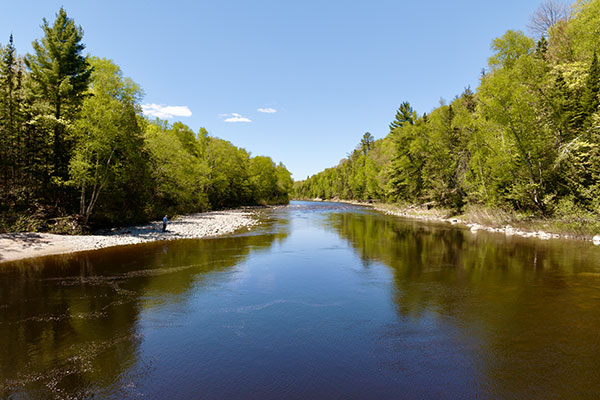
Goulais River is part of the Lake Superior watershed, and an important place for wildlife, families, paddlers, anglers, and local communities. Through this community water quality monitoring program, volunteers are helping collect consistent, long-term information about the health of the river.
By testing the water, sharing observations, and building local knowledge, we are helping people understand and care for the Goulais River for generations to come.
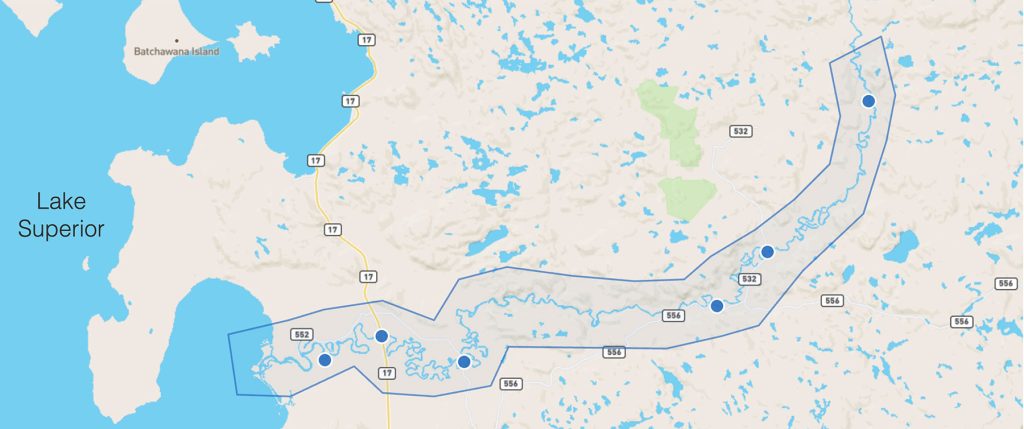
Goulais River Water Quality Monitoring Project Map

Water connects us all.

What we Monitor

Volunteers monitor water quality at selected sites along Goulais River. Some of the measures include temperature, clarity, pH, dissolved oxygen, conductivity, nutrients, and we make field observations such as weather, water levels, and visible changes at these sites.

Why this matters

Long-term community monitoring helps us notice changes over time. The information collected can support education, stewardship, restoration planning, wise development and greater public awareness of Goulais River’s health. Just as importantly, it gives local people of all ages a way to participate in caring for the water health now and into the future.

Get involved

Community volunteers are welcome. We provide the training and equipment. Contact us HERE.

Follow our work on Water Rangers HERE.  And learn all about the world of water health!

Donate to the program HERE to support training, supplies and public engagement.

Spread the word through Facebook and Instagram. @LSWConservancy

Frequently Asked Questions

What is a land trust?

A land trust is a non-profit charitable organization that owns or manages land for the long term stewardship of natural and/or cultural heritage. One of the main activities of a land trust, or nature conservancy, is to actively work with landowners to conserve habitat, protect and steward land for its natural, cultural, recreational, historic and productive values, protect water quality, and address the effects of climate change.

What are land trust standards and practices?

The ethical and technical guidelines for the responsible operation of a land trust.

What is ecotourism?

Responsible travel to natural areas that conserves the environment, sustains the well-being of the local people, and involves interpretation and education.

Read More
What is a water trail?

A designated route along a waterway with publicly accessible access points particularly for non-motorized watercraft. Water Trails are the original highways that have been used for community life for millennia.

Read More

How To Help

Protecting the greatest Lake on Earth means we all have a role to play in addressing the threatening elements of climate change, biodiversity loss, pollution, invasive species, and the diversion of water from the watershed.

We believe in the power of our collective effort to solve these challenges.

Donate